Events
Overview of all events
Our interactive event series, ‘Democracy Reform Conversations’, is a continuation of our earlier series, ‘Conference Conversations’, in which our experts talk with high-level guests about how to make democracy and decision-making more legitimate, participatory, and effective in Europe. Find out about previous and upcoming events here.
On 4 November 2025, the European Commission published the 2025 Enlargement Package but again failed to unveil its long-awaited “pre-enlargement policy reviews and reforms”. Together, these documents were meant to prepare the EU for its next historic leap: an enlarged and reformed Union.
But how does the Enlargement Package evaluate the state of affairs and promote the way forward for EU widening? Who are the frontrunners and laggards – and what explains the widening gap between them? And can the updated approach square procedure and politics? Why did the Commission not publish the policy reviews and its reform proposals? When will they be unveiled and will the Commission once again focus on the gradual integration of candidate countries into selected EU policies, or will it finally address the budgetary, governance and decision-making reforms required for an EU30+?

The discussion focused on the Moldovan government’s efforts to develop strategic security and defence partnerships, strengthen national preparedness and institutional resilience, and deepen cooperation on energy security. It addressed challenges arising from Russia’s war against Ukraine, including the likely intensification of the Kremlin’s hybrid warfare and Moldova’s need for continued EU and international support. In addition, the briefing examined the key reforms Moldova intends to advance in 2026 as part of its EU accession agenda.
The concept of gradual integration has long been embedded in the EU–Ukraine Association Agreement, providing for progressive access to the EU Single Market. While Ukraine has made significant progress over ten years of implementation, particularly in the energy sector, the goal of becoming an integral part of the Single Market has not yet been fully realised in other sectors.
Following the granting of EU candidate status, discussions on gradual economic integration have regained momentum. Accelerated integration across strategic sectors could serve mutual interests and incentivise Ukraine to advance its alignment with EU standards even before full accession.
Moldova has made historic strides in its pursuit of European Union membership. Following the granting of candidate status in 2022 and the European Commission’s 2023 recommendation to open accession negotiations, Moldova now stands at a decisive juncture.
As Moldova advances, the EU must also prepare for a larger Union – strengthening its decision-making, budgetary capacity and absorption mechanisms to ensure that future enlargements enhance rather than strain the European project. This dual-track approach of internal EU readiness and candidate-country reform will be essential for credible and sustainable enlargement.
On 4 November 2025, the European Commission published the 2025 Enlargement Package but again failed to unveil its long-awaited “pre-enlargement policy reviews and reforms”. Together, these documents were meant to prepare the EU for its next historic leap: an enlarged and reformed Union.
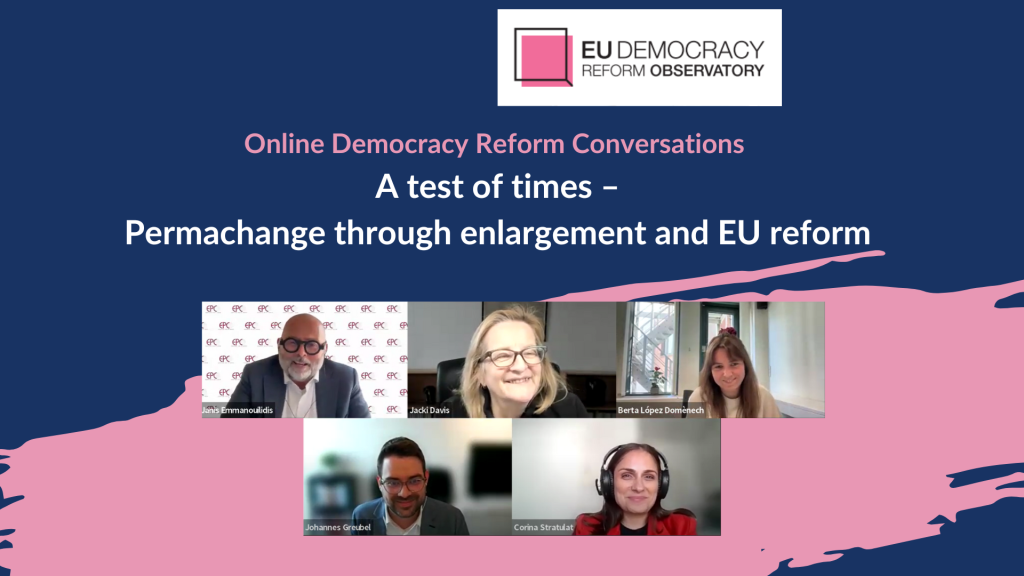
The European Union is navigating a permacrisis – a succession of overlapping shocks that test its resilience and agility. To remain relevant and effective, the EU must embrace permachange: a continuous process of adaptation in response to transformative challenges. Enlargement and internal reform are a test of times for European integration in the years ahead. In the spirit of already “thinking enlarged”, towards a Union of 30+ members, these processes should involve the aspiring countries. This online event explored the twin agendas of widening and deepening from the perspective of candidate countries aspiring to join the Union in the foreseeable future.
The EU has long recognised enlargement as a geostrategic investment and Russia’s act of aggression against Ukraine in February 2022 brought back the imperative to widen the Union. However, the EU27 has been brief when detailing how it plans to reconcile a transformative enlargement process with a more effective EU of 30+ members.
The EU accession process has been a strategic priority for both Ukraine and Moldova, driving reforms and strengthening resilience amid Russia’s war of attrition against Ukraine. As both countries approach the key milestone of opening negotiation clusters, this discussion assessed their reform progress and challenges on the European path. Special attention was given to the ‘Fundamentals’ cluster, which is crucial in shaping the pace of accession talks. Additionally, this policy dialogue explored the EU’s next steps and priorities under the 2025 Polish and Danish Presidencies in this exceptional accession process.
The European Union is navigating a permacrisis – a succession of overlapping shocks that test its resilience and agility. To remain relevant and effective, the EU must embrace permachange: a continuous process of adaptation in response to transformative challenges.
This in-person Policy Briefing with Minister of Foreign Affairs and Foreign Trade of North Macedonia, Timcho Mucunski, discussed the state of play and prospects of North Macedonia’s European integration path. It also shined light on the country’s expectations from the EU in the enlargement dossier at this critical geopolitical juncture.
This in-person Policy Briefing with Minister of European Affairs of Montenegro, Maida Gorčević, discussed the state of play and prospects for Montenegro’s European integration path. It also shined light on the country’s expectations from the EU in the enlargement dossier at this critical geopolitical juncture.
The European Union had long recognised enlargement as a geostrategic investment, and Russia’s act of aggression against Ukraine in February 2022 brought back the imperative to widen the Union. However, the EU27 was brief when detailing how it planned to reconcile a transformative enlargement process with a more effective EU of 30+ members.
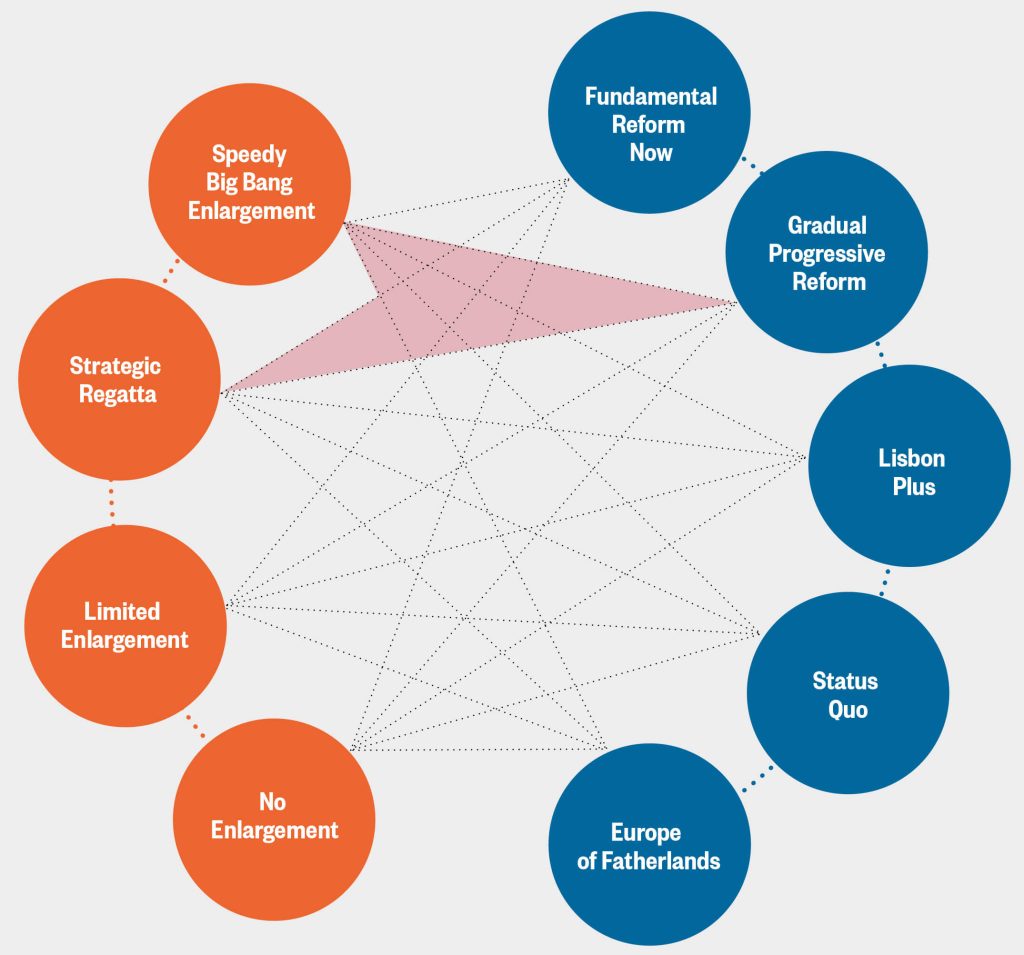
Like the two strands of the Union’s DNA, enlargement and internal EU reform are necessary and should be thought together. To make good on its membership promise to the current candidates, the Union must adapt its operating system.
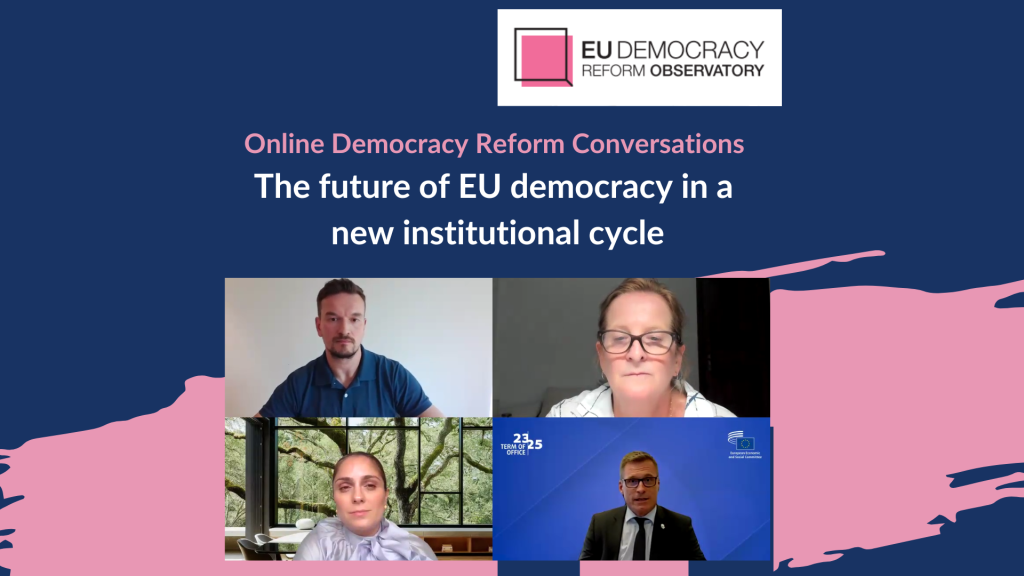
What are the prospects for European democracy and citizen participation in the new institutional cycle? What role could civil society play in advancing citizen participation? How does the European Economic and Social Committee, an institution at the heart of the EU democratic model, see the added value of citizen participation?
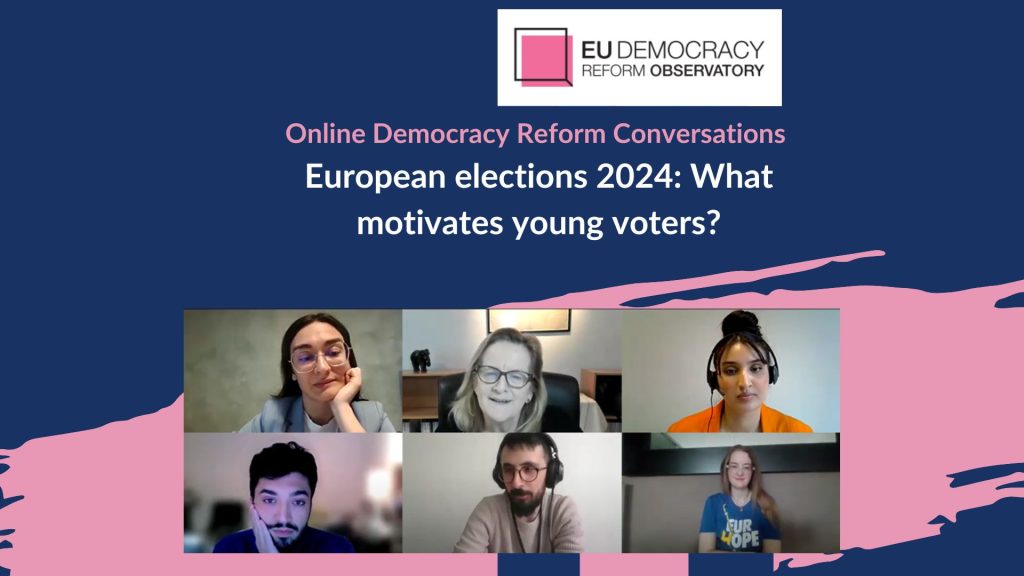
The sixth edition of online EU Democracy Reform Conversations brought five young European leaders to discuss what themes and topics concern young citizens before the European elections.