EU Democracy Reform Observatory

Insights, in-depth analysis, Ideas Papers News Comments Conversations Recommendations

The future of democracy and democratic reform in Europe

The EU Democracy Reform Observatory is a project of the European Policy Centre, which aims to foster the debate on the future of the European integration process. It is dedicated to advancing the debate on the modernisation of European democracy and the reform of an enlarging EU. It aims to develop concrete recommendations to strengthen the legitimacy, inclusiveness, and effectiveness of democratic governance and decision-making within the EU.

Contact

Janis Emmanouilidis

Deputy Chief Executive & Director of Studies

European Policy Centre

Johannes Greubel

Head of the Transnationalisation Programme and Connecting Europe Project Leader

European Policy Centre

News

EU enlargement in the new era: North Macedonia’s perspective

This in-person Policy Briefing with Minister of Foreign Affairs and Foreign Trade of North Macedonia, Timcho Mucunski, discussed the state of play and prospects of North Macedonia’s European integration path. It also shined light on the country’s expectations from the EU in the enlargement dossier at this critical geopolitical juncture. […]

More topics

Papers

How can we update the EU’s operating system in order modernise democracy and improve governance in the European Union? What is the state and prospects of participatory democracy in this context? How can representative and participatory democracy work together? How can we make the best out of the outcomes of the Conference on the Future of Europe? Is there any room and appetite to reform the EU treaties in view of a potential EU enlargement to 30+ members? With our publications, we seek to spark and shape ideas about modernising European democracy through in-depth and outside-of-the-box research, analysis, debate, and policy discussion.

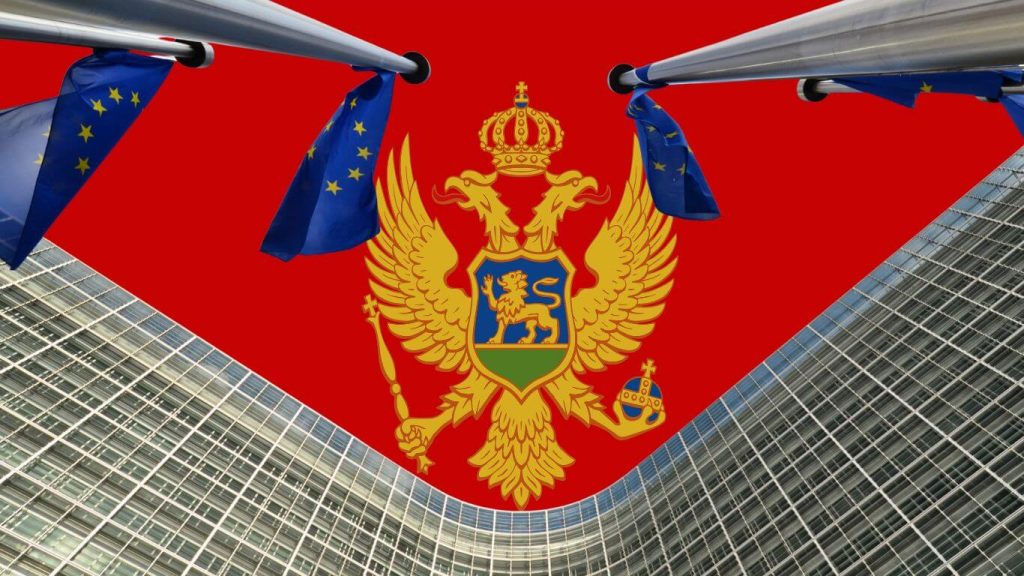
Montenegro’s EU accession: A confidence-building tutorial for the Union

Montenegro’s accession would be a low-risk, high-impact way for the EU to prove its credibility and capacity to deliver enlargement. There is no growth without discomfort, no credibility without keeping one’s promises and no leadership without competence. To navigate the present geopolitical storms and prepare for future shocks, the EU must come of age, mend its reputation and dust off its mantle. Yet strategic wins can make the challenge less formidable. One such opportunity is Montenegro’s accession before the end of the current politico- institutional cycle. By investing the needed political and technical capital to see the country join the Union by 2029, the EU would demonstrate that it can step outside its comfort zone, honour its commitments and act with purpose.
17. August 2026

30 in 2030? Making Montenegro’s EU accession a success story

Montenegro is a test case for the EU’s ability to engage with the enlargement process in a different way within the framework of the current methodology and to demonstrate actual commitment to the policy. Allowing Podgorica to join already, during the current politico-institutional cycle, could serve to restore the credibility of the membership perspective offered to the Balkans, further motivate reform in Ukraine and Moldova and prove that the EU is capable of responding effectively to the tectonic geopolitical shifts triggered by Russia’s war in Ukraine. If Montenegro were to join the EU in the next few years, it would set a precedent for any potential entries thereafter, as well as for the future of enlargement policy. The EU should therefore make sure that Montenegro’s accession is a real success story for the EU, for the new member and for the enlargement dossier as a whole.
17. August 2026

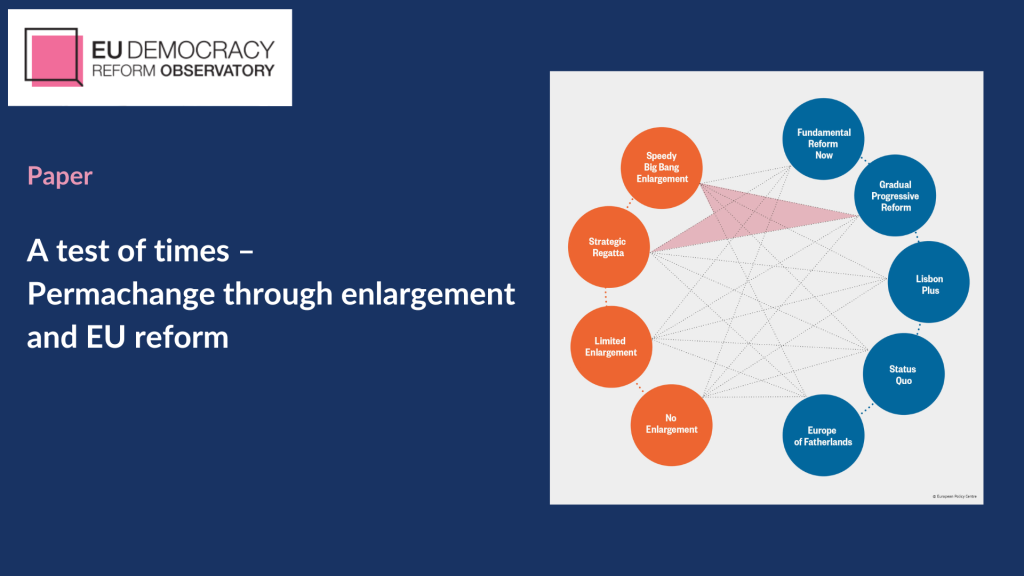
A TEST OF TIMES – Permachange through enlargement and EU reform

This paper seeks to inspire, promote and link the debates on how to widen and deepen European integration in the coming years. Starting from the assumption that enlargement and internal EU reform are normative imperatives, it explores potential avenues to advance both processes (strategic options), identifies the most suitable (combinations of) strategic options, and presents 12 concrete recommendations on how to implement enlargement and internal EU reform in practice in the years ahead.
1. July 2025

Events & Multimedia

Our interactive event series, ‘Democracy Reform Conversations’, is a continuation of our earlier series, ‘Conference Conversations’, in which our experts talk with high-level guests about how to make democracy and decision-making more legitimate, participatory, and effective in Europe. Find out about previous and upcoming events here.

EU enlargement in the new era: North Macedonia’s perspective

This in-person Policy Briefing with Minister of Foreign Affairs and Foreign Trade of North Macedonia, Timcho Mucunski, discussed the state of play and prospects of North Macedonia’s European integration path. It also shined light on the country’s expectations from the EU in the enlargement dossier at this critical geopolitical juncture.

EU Enlargement in the New Era: Montenegro’s Perspective

This in-person Policy Briefing with Minister of European Affairs of Montenegro, Maida Gorčević, discussed the state of play and prospects for Montenegro’s European integration path. It also shined light on the country’s expectations from the EU in the enlargement dossier at this critical geopolitical juncture.

Democracy Reform Conversation:The future of enlargement and EU reform – the candidates’ perspective

The European Union had long recognised enlargement as a geostrategic investment, and Russia’s act of aggression against Ukraine in February 2022 brought back the imperative to widen the Union. However, the EU27 was brief when detailing how it planned to reconcile a transformative enlargement process with a more effective EU of 30+ members.